
Introduction to Effective Altruism
February 11, 2025
Introduction
In the winter of 2023, I spent a few months in a FabLab in Portugal. It was a great opportunity to not only flee from the grey northern Germany winter, but also to learn lots about off-grid living and low-tech. This remote place near to Lagos in the Algarve also introduced me to some interesting people.
Paul Pricman spent some time with us on the Fab Farm and introduced me to the idea of effective altruism. At the time, he was making a career in AI Safety and did some research on the Alignment Problem. Without understanding his highly technical work in full detail, he inspired me to reflect on my career aims and recommended an interesting course by the Non-Trivial Project.
How to (actually) change the world introduces effective altruism by covering the foundations on how to make a large and lasting difference in the world. With up-to-date citations and real-world scenarios, it teaches core concepts for understanding the world and making decisions under uncertainty. It forces you to reflect on values and life goals, and identifies common cognitive biases that distort your perception of reality. It is most important to me to do good with my work and contribute to a better world. “I have to work anyhow to make a living, so why not spend that time wisely.” This approach to work comes with a few questions to be discussed:
It is difficult to define what is good, especially as a society as a whole. (That question is part of the Alignment Problem Paul is working on.) Furthermore, good intentions are not enough. 60–70% of international development programs have either a weak or no positive effect on their intended outcome. Combined with many cognitive biases and misconceptions, it makes it very difficult to (actually) change the world.
Here comes the study of effective altruism into play to hopefully bring some answers to all these uncertainties. So here is my attempt to summarize some of my findings. Be aware that this scratches only the surface of this philosophical and social movement.
What is Effective Altruism?
According to the Centre for Effective Altruism, it is about using evidence and reason to figure out how to benefit others as much as possible and acting on that basis. It is not just about doing good, but about doing good better. (There I see a connection to the double diamond of product development: “First we need to find out the right product and then we need to build the product right.” This can be translated into: “First we need to prioritize the most urgent problems and threats, and then allocate resources and strategies to achieve the best possible outcome.”)
This approach is guided by a set of principles: It is about taking the well-being of others very seriously and the willingness to take significant personal action to benefit others. It is about recognizing how difficult it is to know how to do the most good. Therefore, trying to avoid overconfidence and seeking out informed critiques of our assumptions. Be open to unconventional ideas and strive for the best available evidence.
How to Think
What amazed me most about the course is how much it revealed to me how irrational and biased my thinking is. To figure out what to focus on and make the biggest impact with a fixed number of resources, there are several principles and cognitive biases to look for:
Scope Neglect
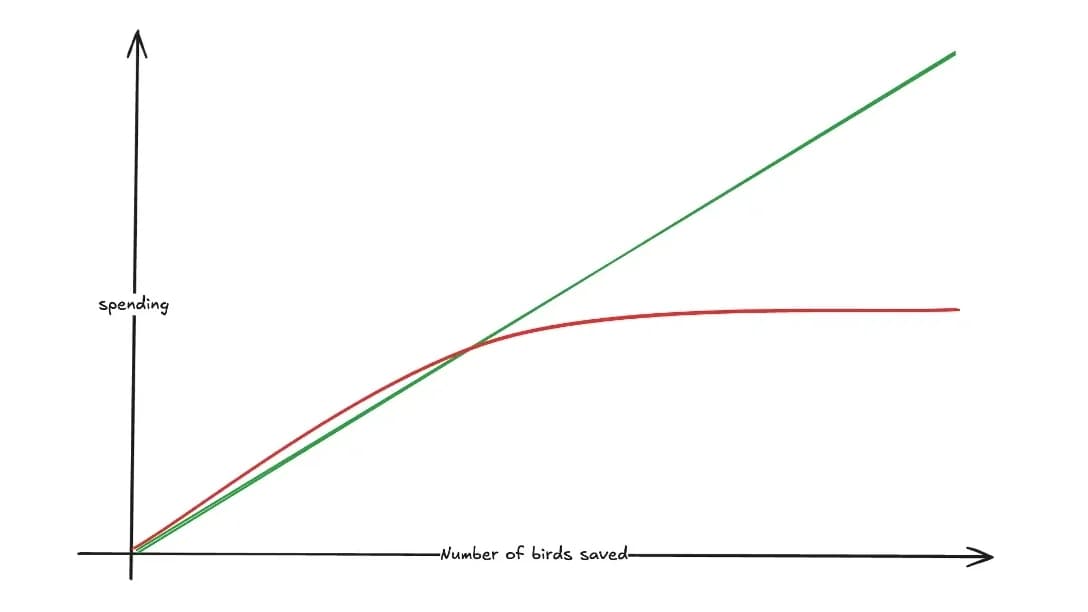
Scope neglect is a cognitive bias that can distort our assessment. A study showed that we tend to increasingly neglect a problem the larger it gets. The valuation of a problem is not valued with a multiplicative relationship to its size. This cognitive bias occurs when an option that would help people twice as much does not get twice the amount of attention. The relationship should be linear and not logarithmic.
Diminishing Returns
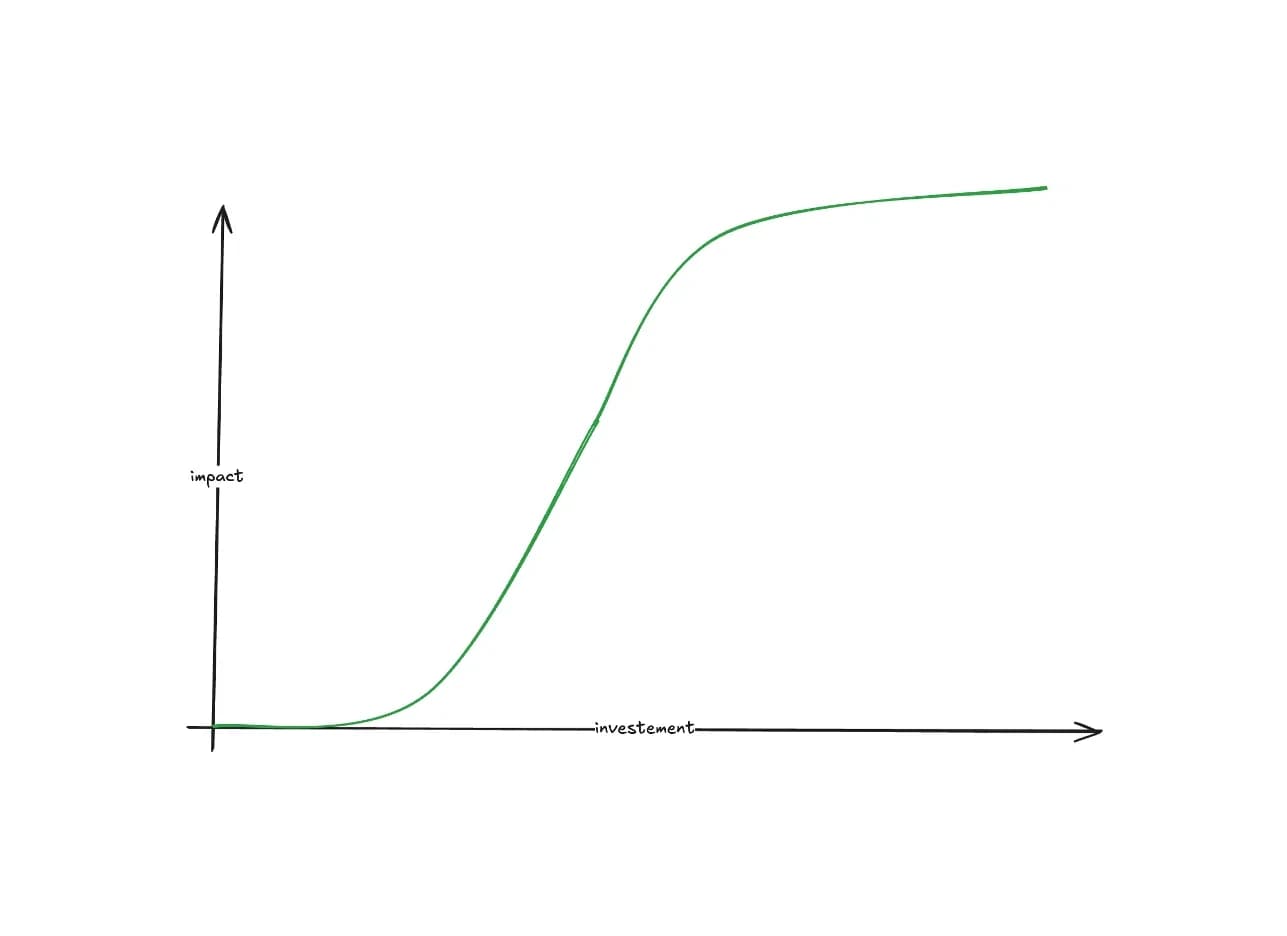
Threats like climate change or medical treatments of cancer are well-studied fields today, which means that the impact of an extra person working towards solving them is relatively small. On the other hand, there are many important problems that have been neglected and are yet to be discovered. If you compare the impact of the pioneers in climate change study with one extra person working on it today, you see the mechanism of diminishing returns at play.
In general, the easiest solutions are implemented first. The more work has been done, the harder it gets to make progress. By exploring neglected problems and shaping new fields of study, one can have an immense impact.
Availability Heuristic
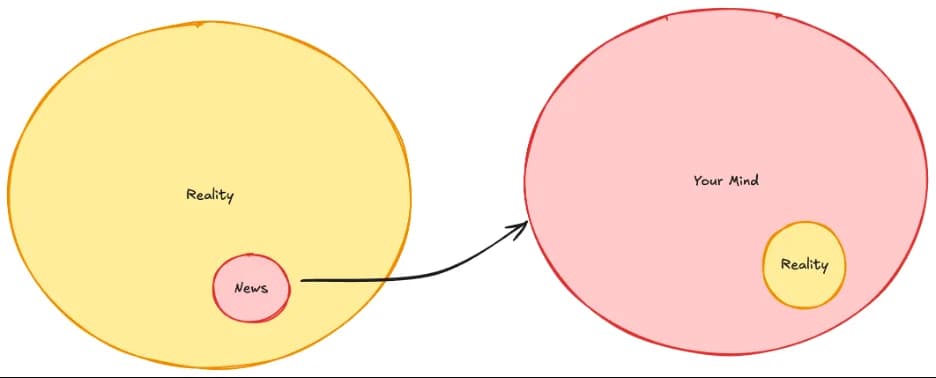
A good approach is to explore problems outside the media spotlight. We are once more biased in our perception of reality: We tend to form our view of the world through the information we consume. By gathering information through common sources like newspapers or TV shows, we get a distorted perception of reality, since media covers only a small area of things happening in the world. The availability heuristic states that we focus on the most recent, frequent, negative, and extreme information, which is only a small portion of reality as a whole.
ITN-Framework
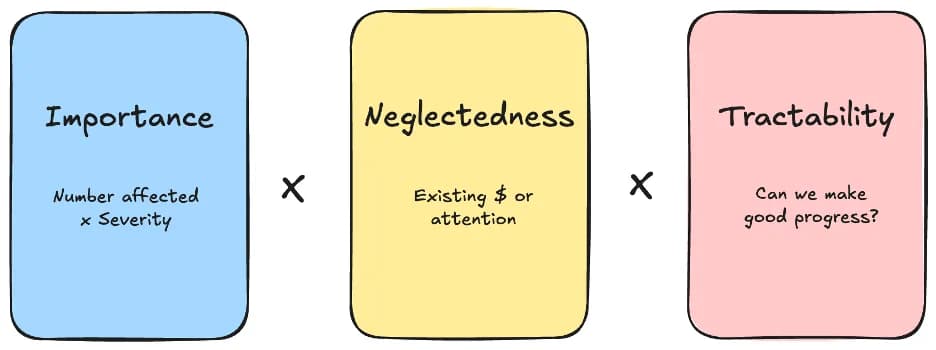
When it comes to prioritizing the problem to work on, the ITN-Framework can bring some clarity. It’s a structured approach and takes the guessing game out of it. ITN stands for importance, tractability, and neglectedness. Let’s look at all three and put together the framework.
Importance
All else being equal, solving a problem that affects more people or a problem that more severely affects people will make a bigger difference. The example given in the course states that donating $10 to an effective climate change solution can avert as much as 100 times more CO2 than recycling a plastic bag 1,000 times. In other words, you must reuse a plastic bag 100,000 times to achieve the same added value as a $10 donation. How many are affected and how severe?
Neglectedness
Here comes the dynamics of diminishing returns into play, which I have introduced to you before. Focus on problems that are neglected and those that have no media attention. This way, your work can pave the way for a new study. How much attention does this problem have?
Tractability
If you have identified an important but yet neglected problem, you must assure that there is actual progress to be made. Tractability considers how much of a difference it is possible to make in the outcome of a problem. It is crucial to look out for promising approaches. Reviewing existing research and building a prototype can evaluate the idea. Review recent breakthroughs in technology or other changes, since that can generate new feasible approaches. Can we make good progress?
The ITN framework by the Open Philanthropy Foundation breaks the problem down into these three factors. It helps to compare different problems and focus on the approach with the biggest impact.
Summary
I hope this has given you a brief introduction to effective altruism and challenged your thinking a little. As we have learned, it is not just about good intentions, but more about the actual outcome. To ensure that our intentions are in line with our actions, we need to apply critical thinking. Be aware of common cognitive biases and a distorted perception of reality.
When it comes to laying out a career path, look out for the low-hanging fruits and keep in consideration the dynamics of diminishing returns. To evaluate the possible outcome, use the ITN framework as a guide.
If you want to help through donations, make sure to spend your money wisely, as many aid organizations fail to achieve their goals. Visit the GiveWell organization. Its goal is to evaluate the cost-effectiveness of non-profit charities.