
Building the Rat Rig Stronghold Pro CNC at WERK
March 1, 2025
This post was translated into English by AI. Read the original →
Project description
WERK e.V. in Bremerhaven is an open creative project and makerspace. Here, people from different backgrounds come together to try out ideas, build prototypes, and learn from each other. So that members could build larger wood projects, furniture, signs, or creative one-offs in the future, a professional CNC mill was to be set up.
The choice fell on the Rat Rig Stronghold Pro CNC Advanced Bundle with a work area of 1500 × 1500 mm.
My job was to build the machine from the kit and get it ready for operation. Even though it was "only" a kit, that meant far more than screwing individual parts together. In the end it was supposed to become a tool that many people in the makerspace could use reliably.
From kit to machine
When the numerous boxes arrived, the eventual machine was hard to picture at first. Aluminum profiles, linear guides, cables, motors, and electronics lay before us as individual parts.
Over several weeks, the finished CNC system took shape step by step. I was occasionally supported by other members of the project, who helped with the assembly or offered a second hand.
Still, the responsibility for the assembly ultimately lay with me: if something didn't work later, I had to understand why.
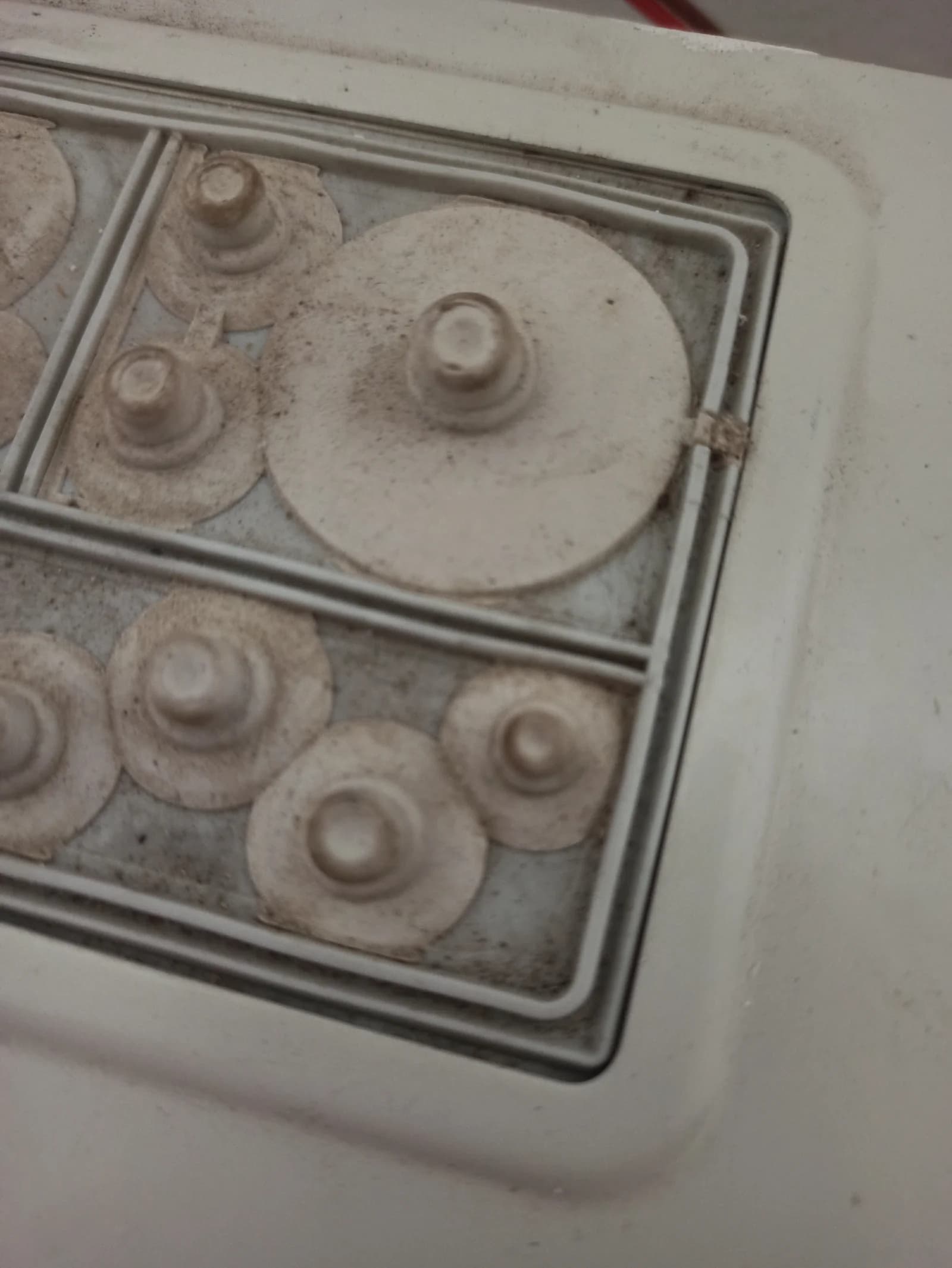
A look at the vacuum-formed parts and small components sorted out of the kit.
The first challenges
The mechanical assembly went largely without problems. The real challenges began as soon as the electronics were put into operation.
A particularly confusing situation arose when two stepper motors on the same axis suddenly moved in opposite directions. Instead of working in sync, they tried to fight against each other.
Moments like these are part of building more complex machines. They can usually be solved, but they demand patience and the willingness to look for faults systematically.
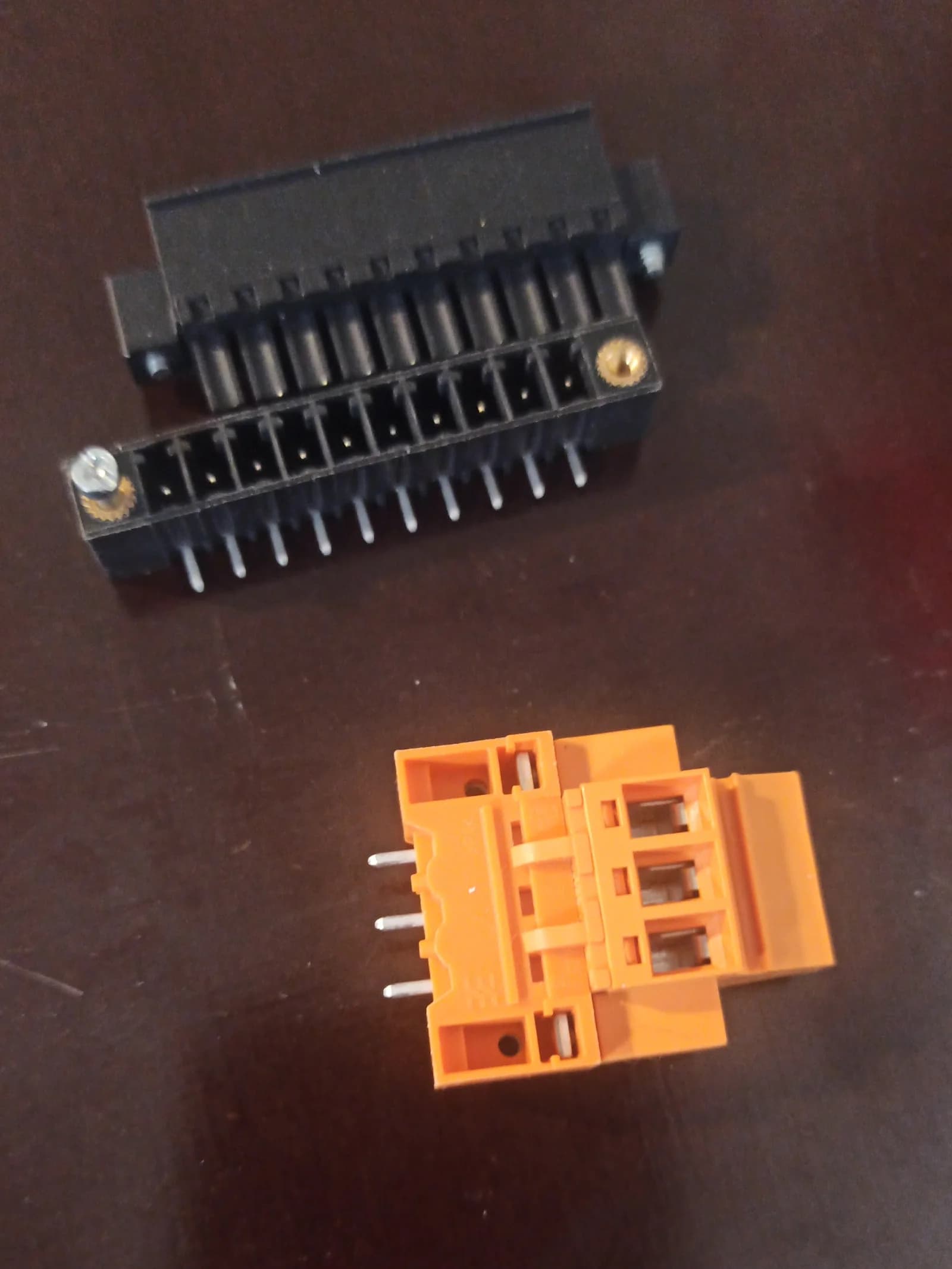
Connectors like these were used to hook up motors and limit switches — this is also where the reversed rotation direction of the stepper motors could be fixed.
Wiring the AXBB-E motion controller — this is exactly where the cause of the reversed stepper-motor rotation was tracked down.
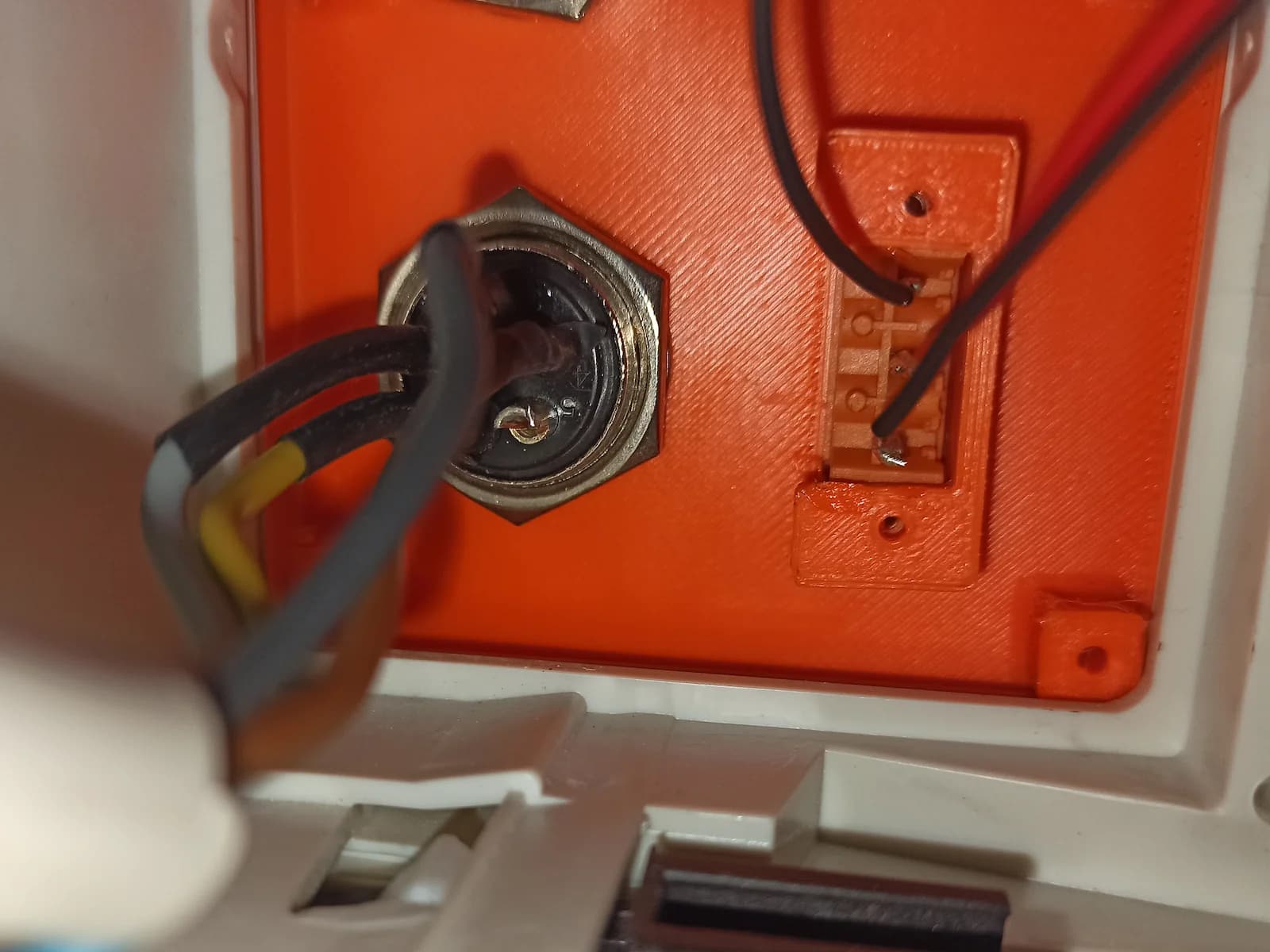
The self-designed cover for the electronics enclosure — printed from PLA to integrate cable feed-throughs cleanly.
The software is the real machine
The biggest learning curve only began after assembly.
The Stronghold Pro ran on UCCNC, while the toolpaths were prepared in Fusion 360. Mechanically the machine already stood before us — yet it was far from ready for use.
Suddenly questions came up like:
- Does each axis move in the right direction?
- Where exactly is the machine zero point?
- What distinguishes machine coordinates from workpiece coordinates?
- How do you set the zero point correctly?
- What are the consequences of a wrongly set origin?
Understanding coordinate systems in particular proved decisive. Only through that did a moving machine become a precise tool.
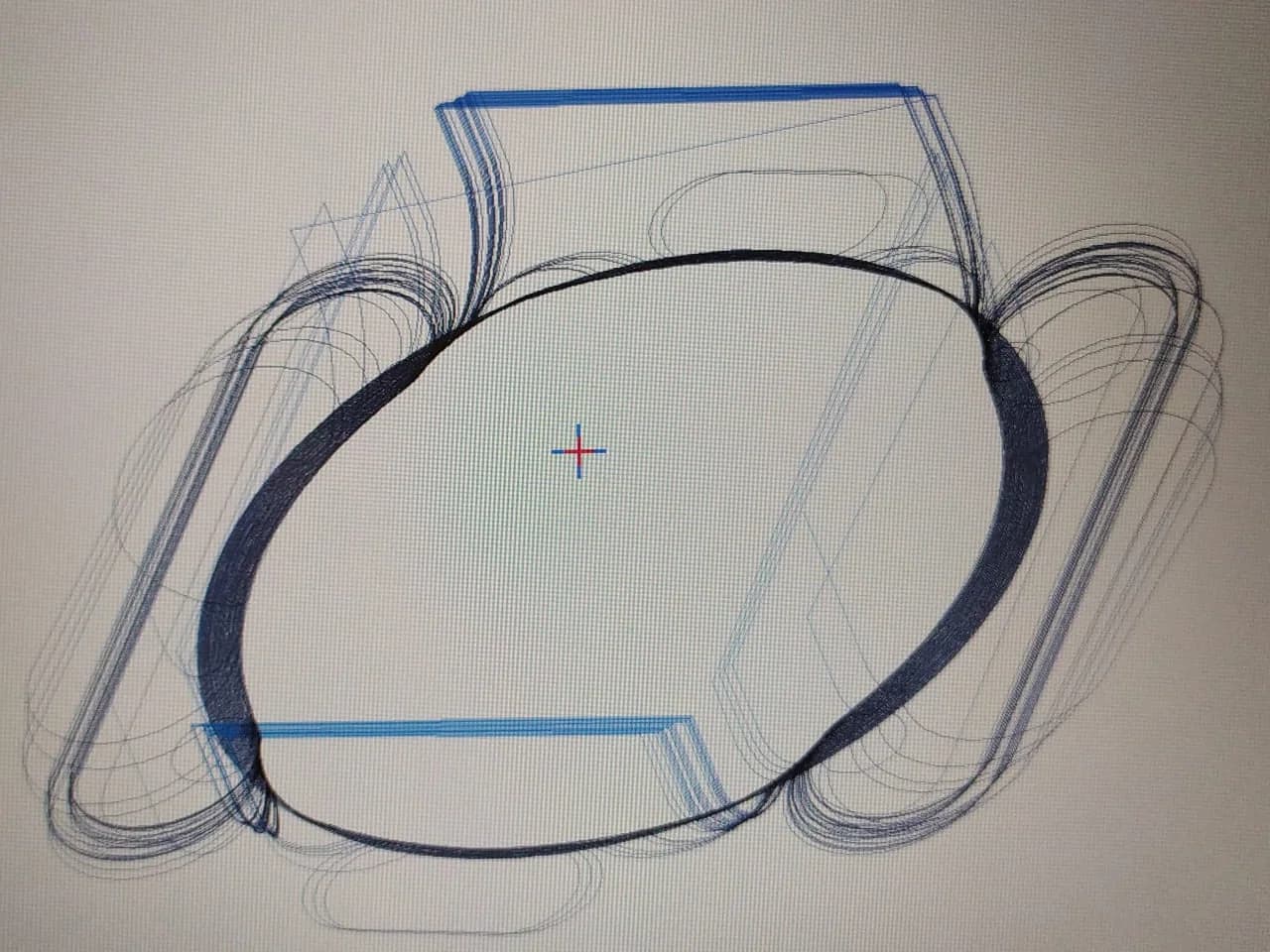
The toolpaths in UCCNC — digital coordinates that are later turned into real cuts.
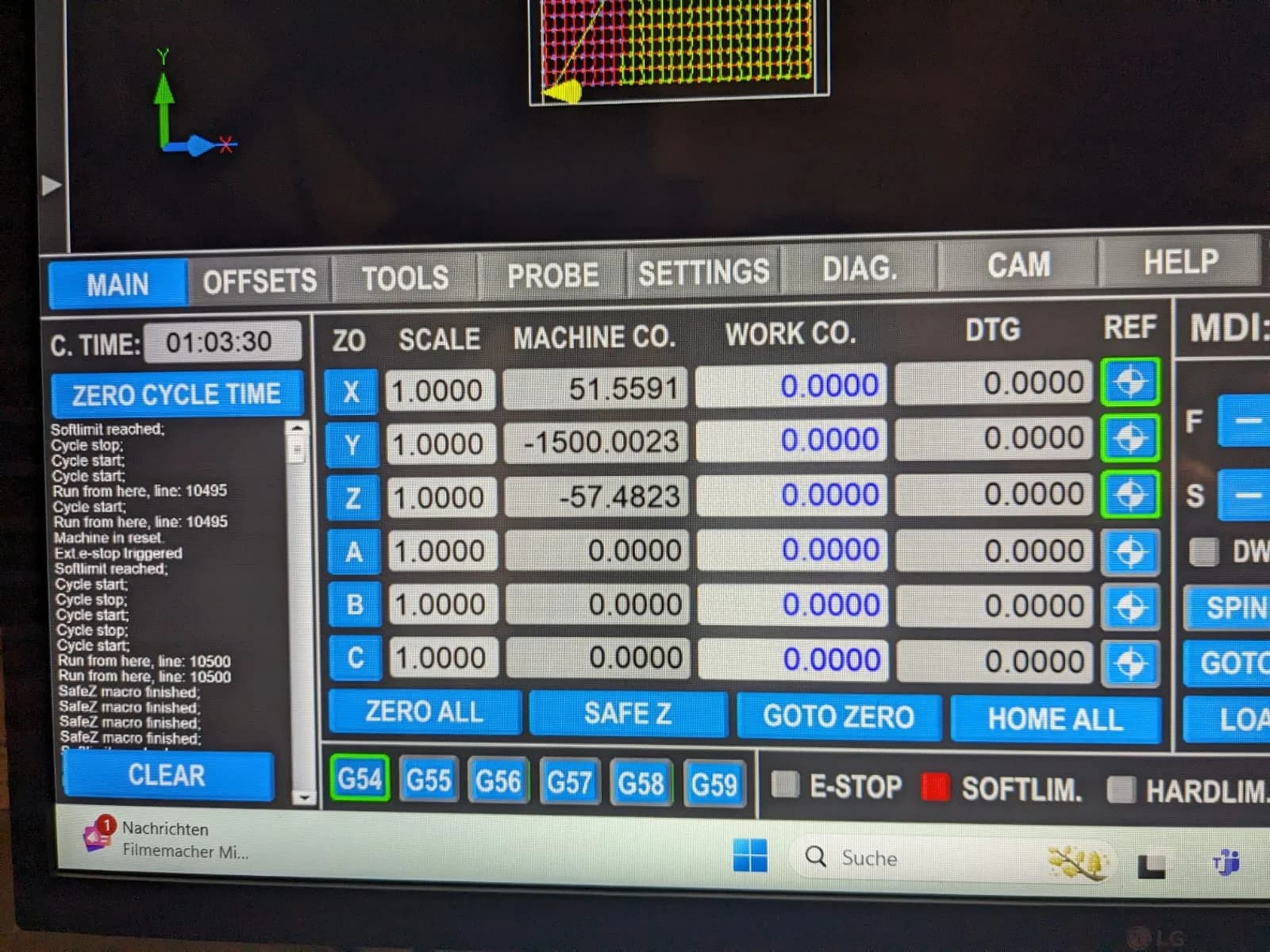
The difference between machine and workpiece coordinates — a crucial understanding for precise work.
The most frightening moment
The hardest step was, surprisingly, not the assembly.
It was the moment of pressing Start for the first time.
The machine was large, powerful, and expensive. A wrong zero point or a faulty setting could, in the worst case, damage the tool, the workpiece, or the machine.
This uncertainty is probably part of every first CNC experience.
With each successful test run, though, trust in the machine grew — and in my own abilities.
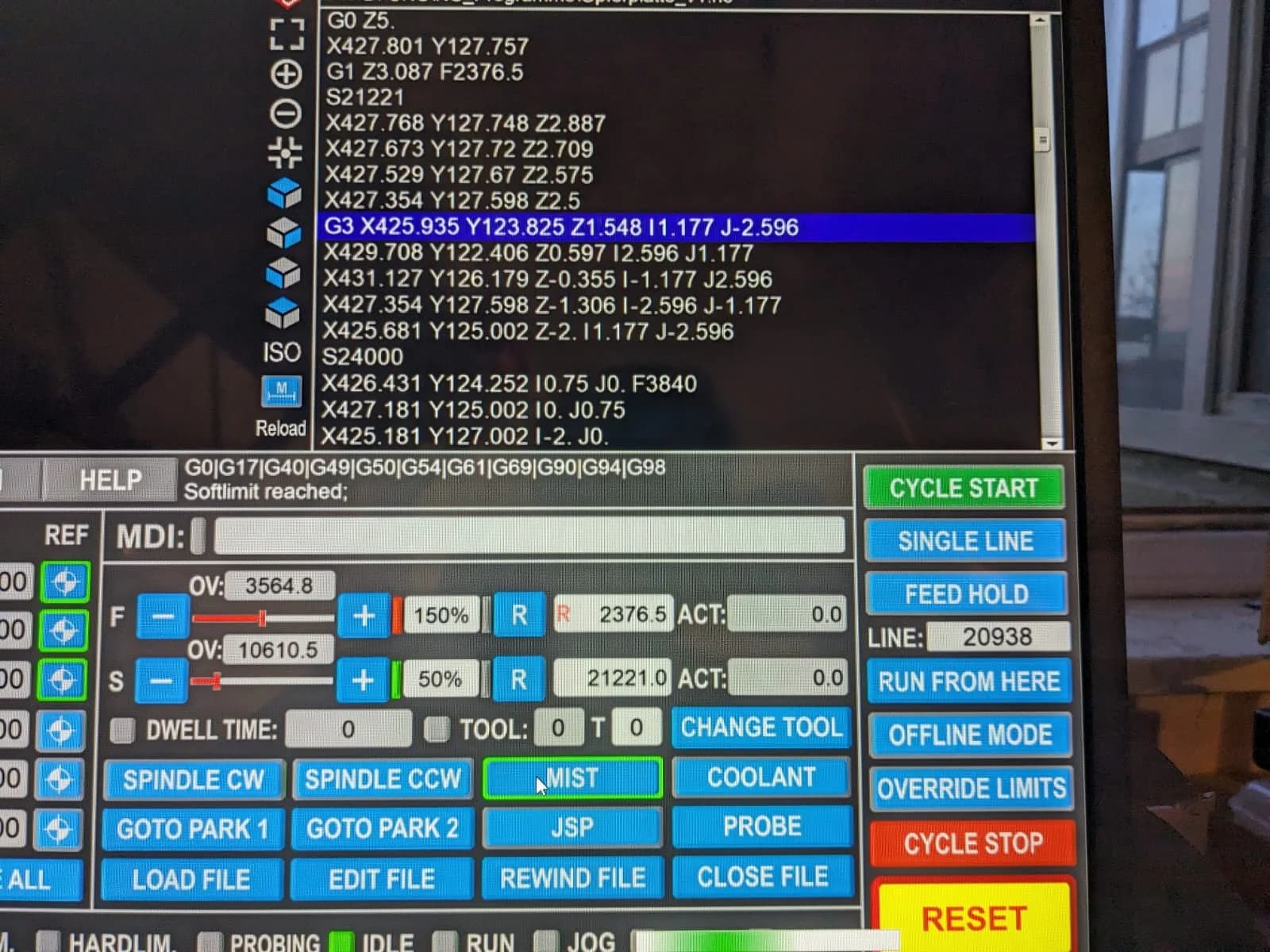
The most frightening moment — the green cycle-start button in UCCNC just before the first cut.
Adjustments for everyday use
In practical operation it quickly became clear that the standard configuration didn't meet all requirements.
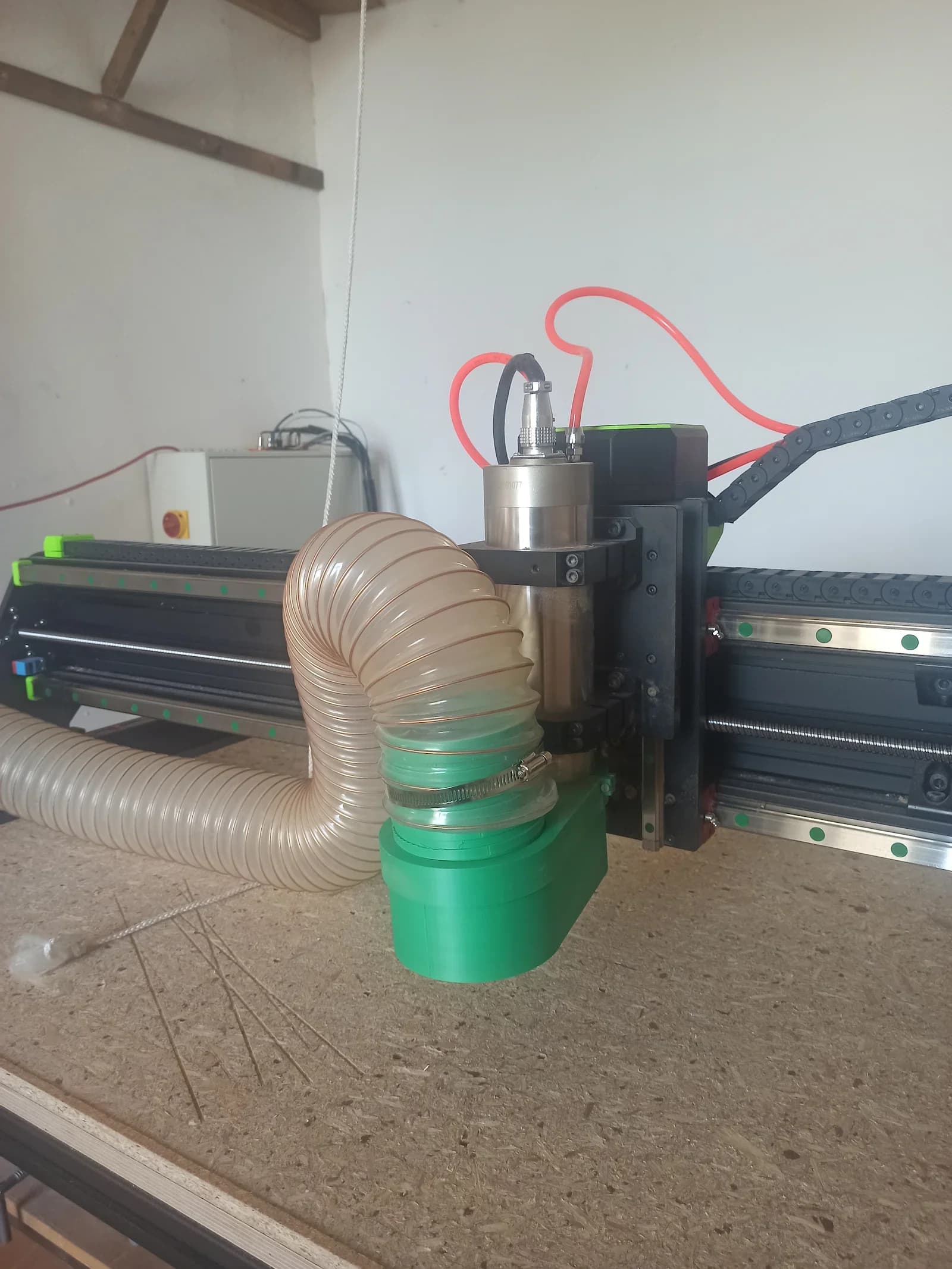
The lack of dust extraction in particular was a problem. Wood dust spreads quickly across the entire work area and impairs both visibility and cleanliness in the makerspace.
So a dust extraction system was added based on existing designs from Thingiverse. A holder for the tool-setting probe was also made on the basis of existing community models.
Beyond that, I designed my own cover for the electronics enclosure to integrate cable feed-throughs cleanly. The needed parts were printed from PLA.
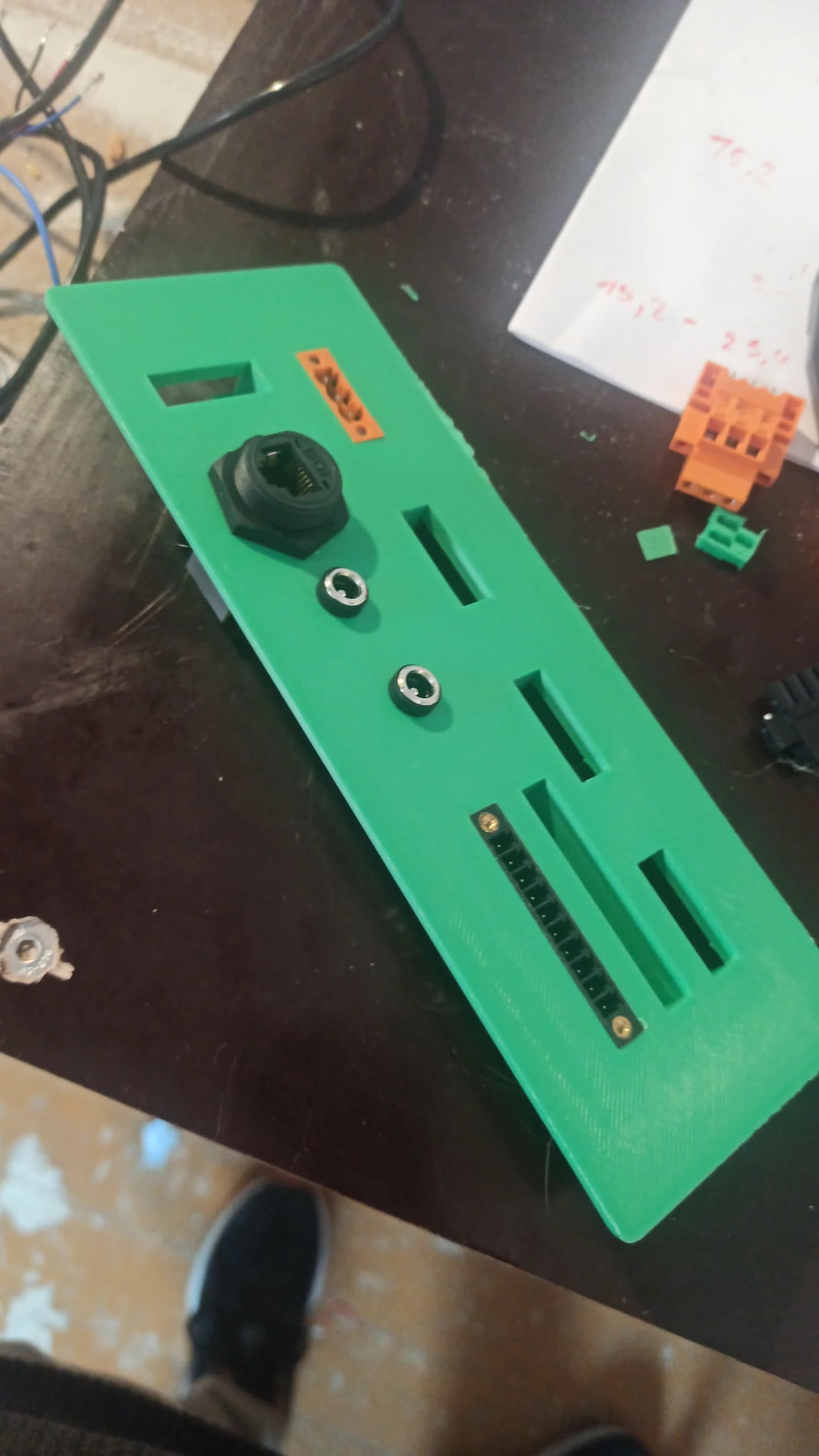
An earlier design version of the cover — cutouts for connectors and feed-throughs were adjusted iteratively until the final orange version emerged.
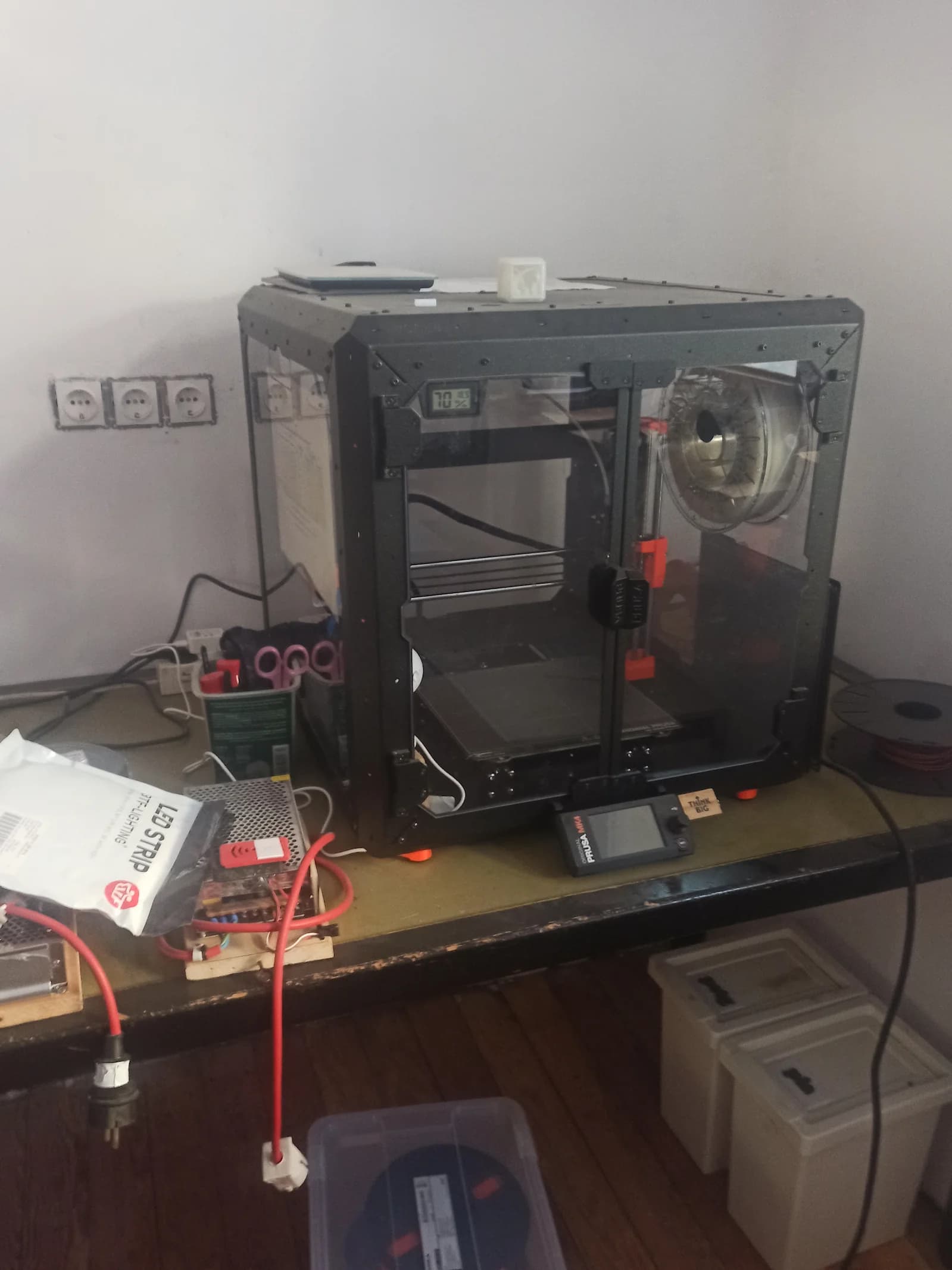
The 3D printer used to make the holders and the enclosure cover from PLA.
These small adjustments turned a standard kit into a machine that fit WERK's requirements better.
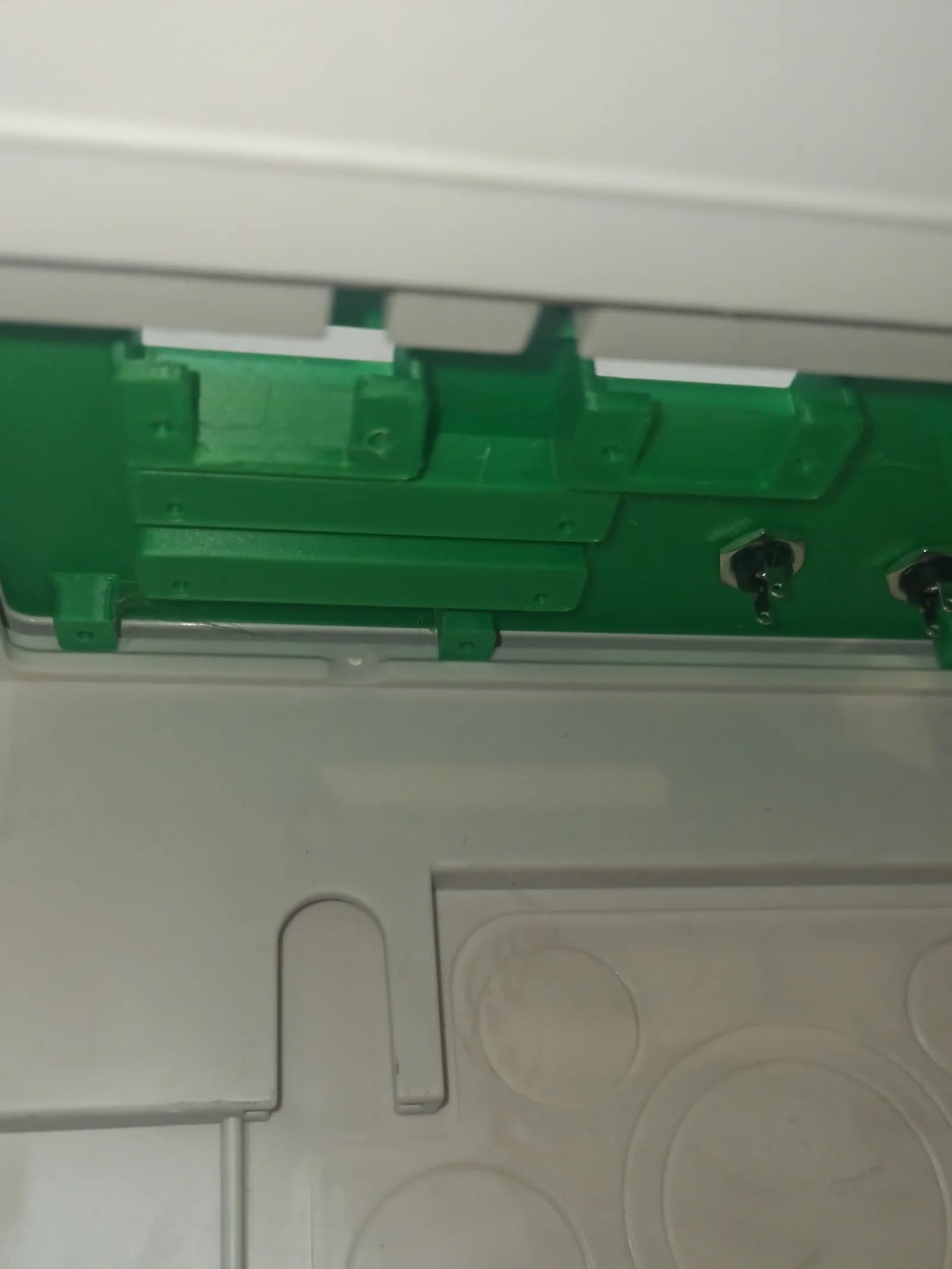
3D-printed PLA holders — adapted to the requirements of the makerspace.
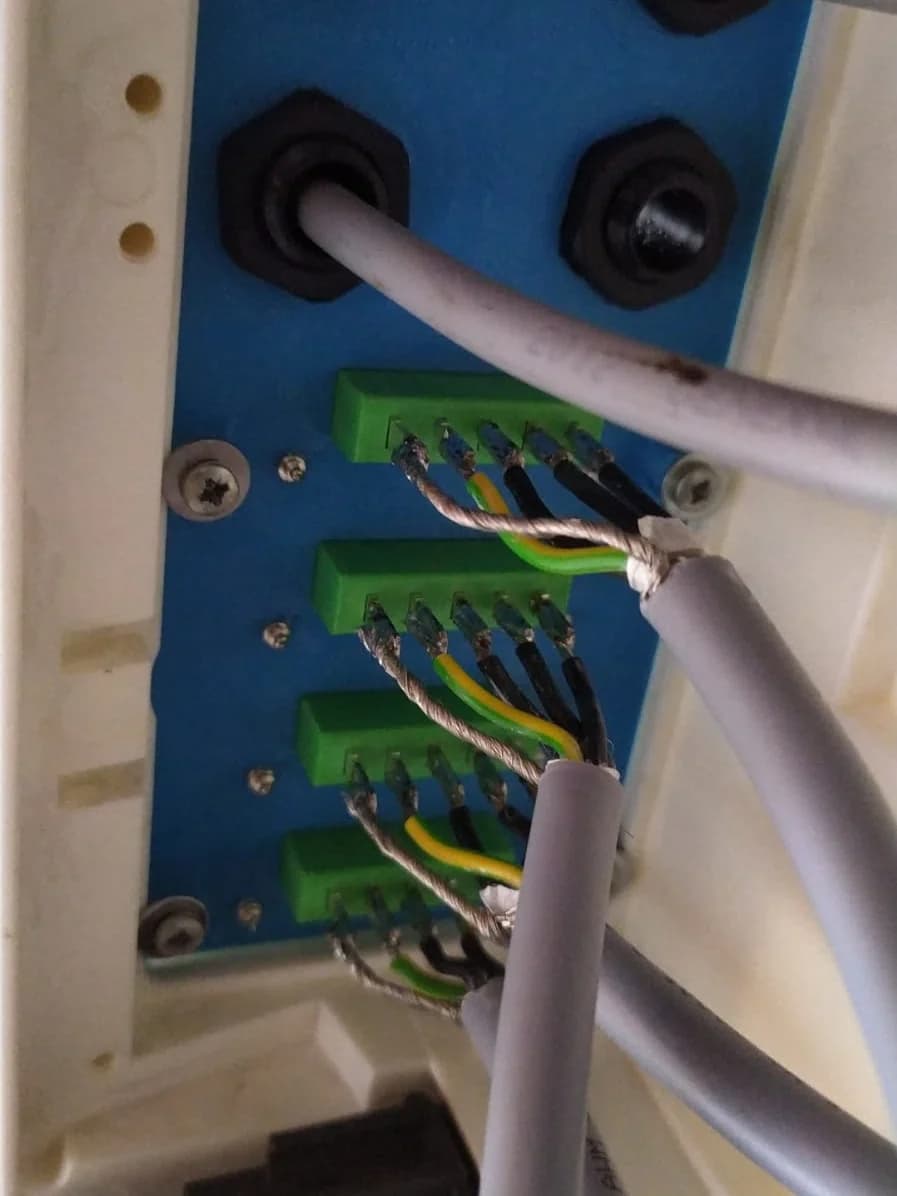
The neatly routed wiring inside the electronics enclosure.
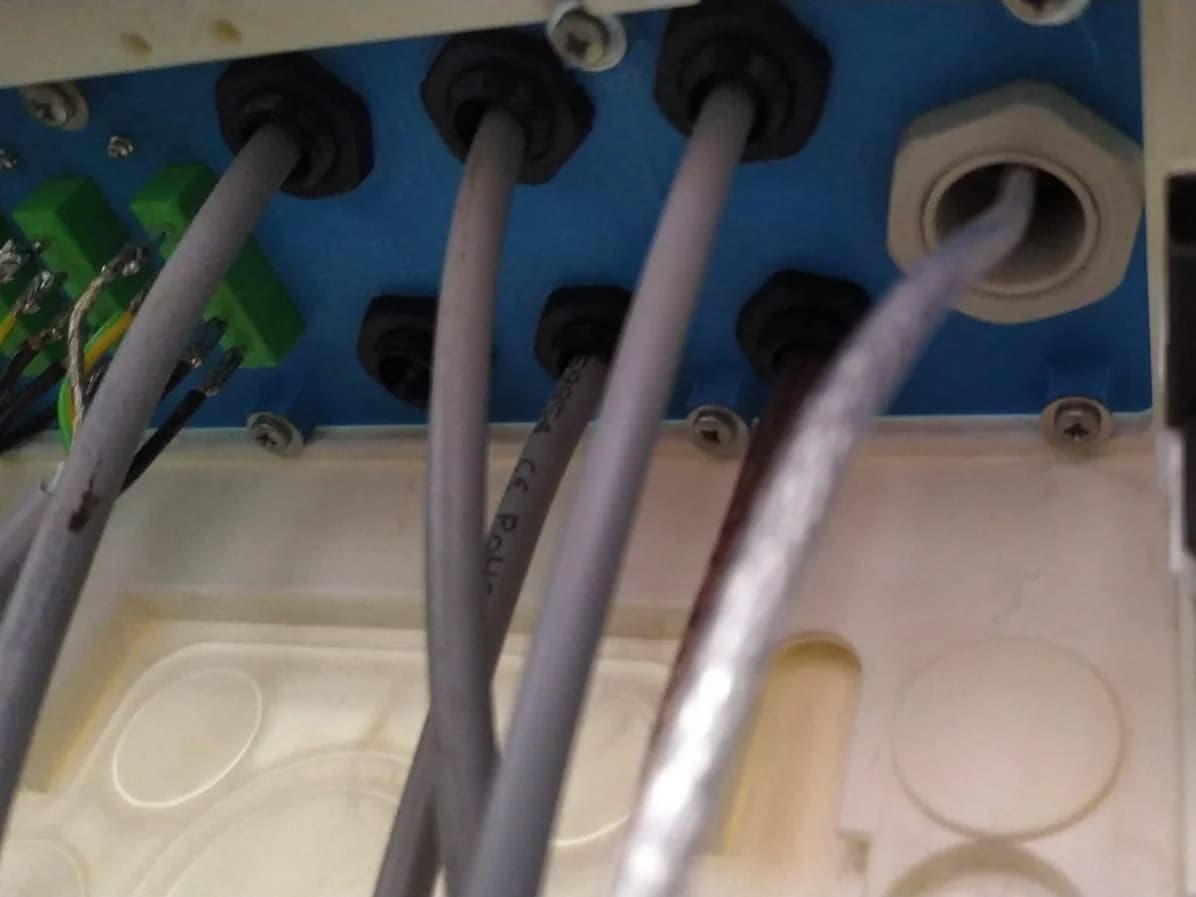
Each cable is fed individually through a cable gland into the enclosure — another step toward maintenance-friendly wiring.
The first cut
The first successful milling job was deliberately unspectacular.
A square of HDF.
No complex relief, no elaborate contour.
And yet that moment was something special.
After weeks of assembly, wiring, configuration, and troubleshooting, digital coordinates turned into a real workpiece for the first time.
The machine worked.
The first cut of the Stronghold Pro — the spindle with dust extraction in action.
What I learned
The project showed me that modern manufacturing is far more than mechanics.
A CNC mill combines many disciplines at once:
- Mechanics
- Electronics
- Software
- CAD/CAM
- Troubleshooting
- Safety awareness
Above all, I learned that respect for a machine makes sense — but fear disappears with understanding.
The better you understand how coordinates, homing runs, and toolpaths work, the more natural the operation becomes.
Conclusion
Building the Rat Rig Stronghold Pro wasn't simply assembling a kit.
It was about creating, out of a collection of individual components, a tool that today helps people at WERK e.V. turn their ideas into reality — and the machine is listed on Offene Werkstätten for anyone to book.
Maybe that's exactly the real strength of makerspaces:
You don't just build things.
You build skills, self-confidence, and shared knowledge.